stop asking if your brand is authentic
Reading time:
5 minutes
There's an argument about personal branding that keeps looping online, and I believe it is because everyone's using the same word to mean different things.
There's an argument about personal branding that keeps looping online, and I believe it is because everyone's using the same word to mean different things.
The word is authenticity.
One camp says it's the future of personal branding, the thing that will separate you from everyone else as AI floods the feed with polished content. Another camp says an authentic brand can't exist, because brands are manufactured by definition. Lights, decisions, edits, what you leave in, what you cut.
Both camps are making a real point, in their own way. But they're not actually disagreeing. They're answering different questions.
The argument keeps looping because we're debating the word instead of the goal underneath it. The honest answer to "should a personal brand be authentic?" is another question. What is the brand actually for?
If the brand is built to perform, authenticity is optional. Sam Altman's recent rebrand on X is the cleanest example I've seen this year. New profile picture, softer angle, friendlier tone, more approachable comments. The shift happened shortly after the time the New York Times ran a difficult profile on him, and OpenAI was facing some deep waters. You can feel the calibration. He's having his Zuckerberg-in-a-tee swag moment, and it's working the way it's supposed to. Defend the company. Reset the perception. Buy back goodwill. That isn't inauthenticity. It was never trying to be authentic. It was trying to be effective.
If the brand is built to be known for a passion, the math flips. You can't fake that one. Or you can, but only for a while.
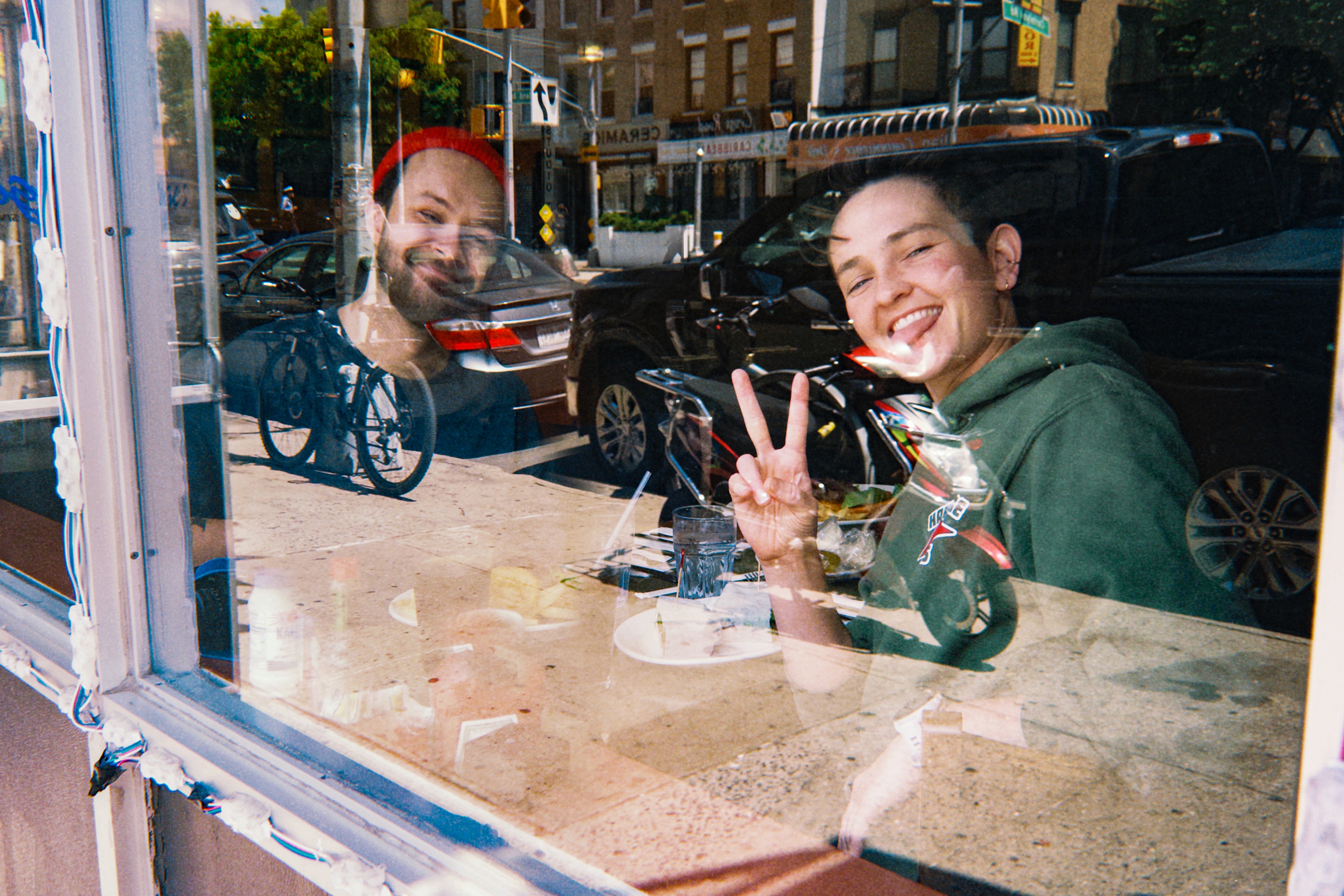
Becca Farsace is the example I keep coming back to. She's been making videos about cameras and tech for years on YouTube, and she's one of the few creators I've ever met where the person on camera and the person off camera are genuinely the same. We were lucky enough to stay with her this past week in New York, and what stayed with me wasn't the conversations about cameras or YouTube. It was a small moment on a walk when she stopped to joke with a stranger digging in his front yard, asking him what he was looking for. The same energy she brings to a review is the energy she brings to everyone she meets. She's incredibly kind, and that kindness doesn't have an off-switch. There's no second version. The brand and the person are pointed in the same direction, which is just toward what she actually finds interesting in the world. That's why she's been able to do this for as long as she has. You can't play the YouTube game for years while performing every day. People sense the difference even when they can't name it. Performance leaks.
So when someone asks me whether their personal brand should be authentic, the question is the wrong size. The real question is whether the brand is pointed at something the real you can keep walking toward for a long time. If it is, authenticity takes care of itself. You don't need to manufacture it. The evidence accumulates, and people start to feel it.
If it isn't, no amount of vulnerable posting will fix the gap. You'll just be performing harder.
I think this is also why personal branding feels different right now than it did five years ago. AI can do polished. AI can do consistent. AI can do on-brand. The thing AI can't do is have a life behind the work. The mess, the doubts, the actual client that broke your heart, the project that taught you something you didn't want to learn. That's the part that can't be generated. And that's the part most people leave out, because it doesn't look like a brand.
A personal brand isn't a performance of who you are. It's a record of where you've actually been.
If you don't have that record yet, the work isn't to brand harder. The work is to go live a bit more, and pay closer attention while you do.
The word is authenticity.
One camp says it's the future of personal branding, the thing that will separate you from everyone else as AI floods the feed with polished content. Another camp says an authentic brand can't exist, because brands are manufactured by definition. Lights, decisions, edits, what you leave in, what you cut.
Both camps are making a real point, in their own way. But they're not actually disagreeing. They're answering different questions.
The argument keeps looping because we're debating the word instead of the goal underneath it. The honest answer to "should a personal brand be authentic?" is another question. What is the brand actually for?
If the brand is built to perform, authenticity is optional. Sam Altman's recent rebrand on X is the cleanest example I've seen this year. New profile picture, softer angle, friendlier tone, more approachable comments. The shift happened shortly after the time the New York Times ran a difficult profile on him, and OpenAI was facing some deep waters. You can feel the calibration. He's having his Zuckerberg-in-a-tee swag moment, and it's working the way it's supposed to. Defend the company. Reset the perception. Buy back goodwill. That isn't inauthenticity. It was never trying to be authentic. It was trying to be effective.
If the brand is built to be known for a passion, the math flips. You can't fake that one. Or you can, but only for a while.
Becca Farsace is the example I keep coming back to. She's been making videos about cameras and tech for years on YouTube, and she's one of the few creators I've ever met where the person on camera and the person off camera are genuinely the same. We were lucky enough to stay with her this past week in New York, and what stayed with me wasn't the conversations about cameras or YouTube. It was a small moment on a walk when she stopped to joke with a stranger digging in his front yard, asking him what he was looking for. The same energy she brings to a review is the energy she brings to everyone she meets. She's incredibly kind, and that kindness doesn't have an off-switch. There's no second version. The brand and the person are pointed in the same direction, which is just toward what she actually finds interesting in the world. That's why she's been able to do this for as long as she has. You can't play the YouTube game for years while performing every day. People sense the difference even when they can't name it. Performance leaks.
So when someone asks me whether their personal brand should be authentic, the question is the wrong size. The real question is whether the brand is pointed at something the real you can keep walking toward for a long time. If it is, authenticity takes care of itself. You don't need to manufacture it. The evidence accumulates, and people start to feel it.
If it isn't, no amount of vulnerable posting will fix the gap. You'll just be performing harder.
I think this is also why personal branding feels different right now than it did five years ago. AI can do polished. AI can do consistent. AI can do on-brand. The thing AI can't do is have a life behind the work. The mess, the doubts, the actual client that broke your heart, the project that taught you something you didn't want to learn. That's the part that can't be generated. And that's the part most people leave out, because it doesn't look like a brand.
A personal brand isn't a performance of who you are. It's a record of where you've actually been.
If you don't have that record yet, the work isn't to brand harder. The work is to go live a bit more, and pay closer attention while you do.
I'm just getting started
and I'd love for you to join me along the ride. And if video's more your thing, I might be taking this to YouTube as well.