What four months without a phone taught me
Reading time:
5 minutes
I consider myself a designer. And one perk that comes with the job is that you get to shape the world around you. Not just accept it. Question it. Reimagine it. Ask why things are the way they are, and whether they have to stay that way.
I consider myself a designer. And one perk that comes with the job is that you get to shape the world around you. Not just accept it. Question it. Reimagine it. Ask why things are the way they are, and whether they have to stay that way.
That's the part of the work I love most. The questioning.
And lately, I've been questioning our phones.
Not in a "screen time is bad" kind of way. I'm tired of that conversation. It's too easy, too shallow. It lets us off the hook by making the problem about willpower when I think it's actually about design.
Here's what I mean.
If you had a personal assistant, a real one, a human being whose job it was to help you manage your life, you'd have expectations. You'd expect them to know when to interrupt you and when to leave you alone. You'd expect them to understand that when you're having dinner with your wife, or playing with your kid, or sitting across from a friend you haven't seen in months, that's not the moment to tap you on the shoulder and say "hey, someone liked your photo."
You'd expect them to protect your attention, not auction it off to whoever wants a piece of it.
But our phones don't work that way. And somehow, we just accept it.
We've been trained to think the problem is us. That we need more discipline, more boundaries, more apps to limit our apps.
Every single one of those solutions asks you to fight against a device that was designed to capture your attention. A battle of willpower against an entire industry. And even if you win today, you have to win again tomorrow. And the next day. Forever.
That's not a solution.
I'm not interested in getting better at resisting my phone. I'm interested in a phone that doesn't need to be resisted in the first place.
That's a design problem. And design problems have design solutions.
What if we've been so grateful for the magic that we forgot to ask what it's costing us?
I think it’s about time
I can’t un-hear Jony Ive saying he never imagined the iPhone to be used the way it's being used now at the Stripe Conference, last year. That lands hard for me. The people who built these things didn't intend for them to consume us. But here we are. And the distance between the intention and the reality feels like something worth examining.
So I decided to run a little experiment.
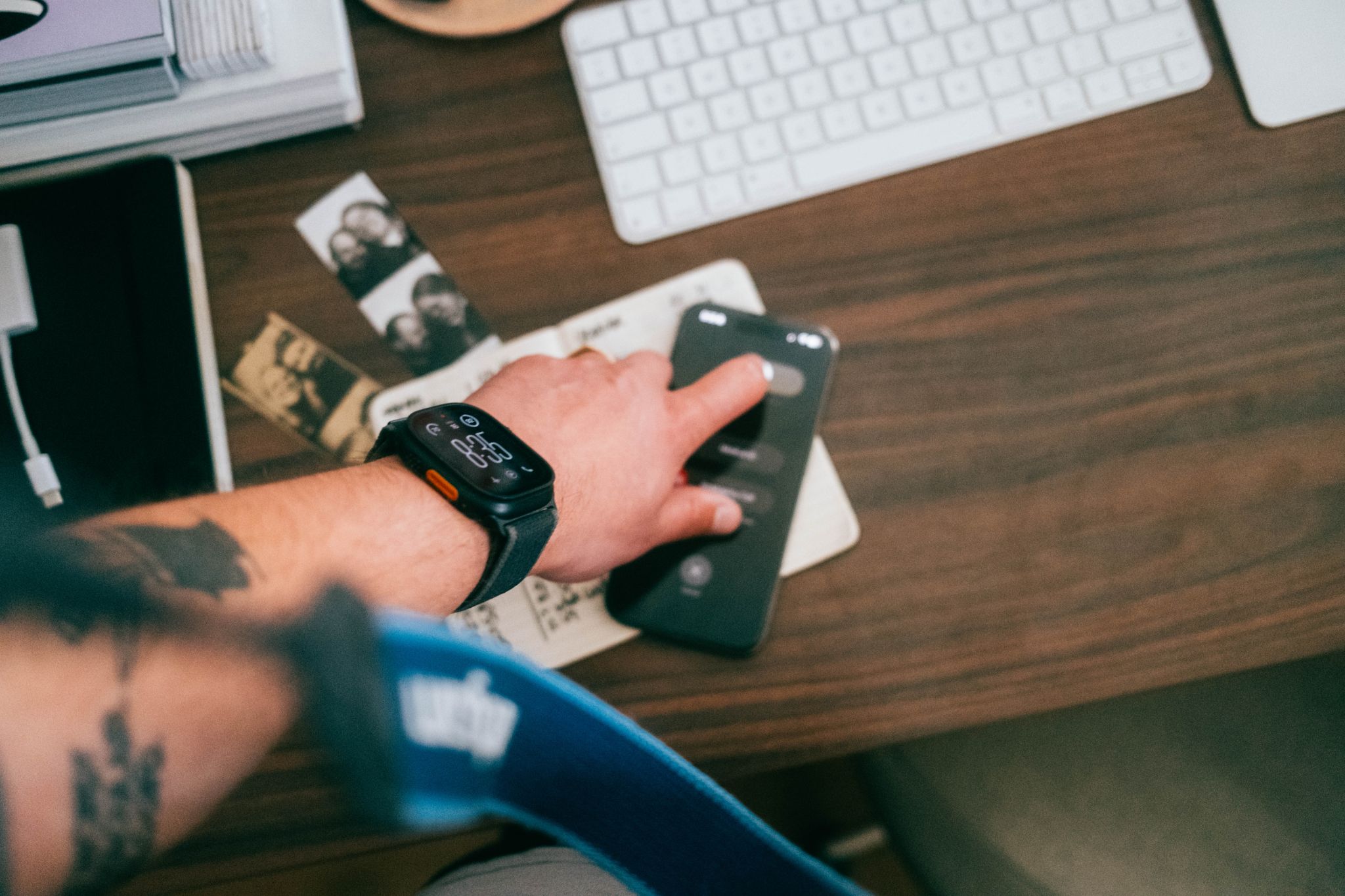
For four months, I didn't carry a phone. I sold my iPhone, bought an Apple Watch Ultra, and tried to live with just that. Not as a detox, not as some performative rejection of technology. I did it because I wanted to feel what it's like to live closer to a future I believe is possible.
A future where technology serves us and then steps back. Where it shows up when we need it and stays quiet when we don't. Where the device on your wrist or in your pocket behaves less like a slot machine and more like a thoughtful assistant who actually understands what matters to you.
I wanted to know: does that future feel as good as I imagine?
It did. Kind of.
That's the part that surprised me most. Not the inconveniences, though there were plenty. What surprised me was how calm I felt. How present. I could still be reached. My wife could still call me. I could still pay for things and unlock my car and listen to a book on a long walk. The essentials were there.
But the noise was gone.
No picking up my phone halfway through a TV episode because four episodes in, my brain decided it needed more. No reaching for my phone the moment things got quiet, the moment I got bored. Instead, reaching for a book. A notebook. Or just sitting there, doing nothing, letting the boredom be boring.
And I started noticing other things too.
I stopped taking photos of everything. Without a smartphone camera in my pocket, I started carrying a little film camera. The kind where you only get 27 shots and you have to wait to see if they turned out. I stopped trying to capture every moment and started actually being in them. Most of the photos on my phone, I'll never look at again. I took them out of reflex, not love.
But I won't pretend it was all calm and presence.
The world isn't ready yet
Apple still assumes you have an iPhone. If you want iMessage to work on your watch, your phone has to stay connected to the internet somewhere, even if it's sitting in a drawer. And if you don't unlock it every three days, it reboots itself. Security feature, apparently. So you end up babysitting the very device you're trying to escape.
My car became a daily frustration too. The watch couldn't reliably unlock it in the background. Nine times out of ten, I had to pull up the app, tap a button, wait. Eventually I just started carrying the key card again.
Small things. But they added up. And they made me realize that the future I'm looking for isn't just about the device on your wrist. It's about everything around it. The infrastructure.
The way every system is built expecting you to have a phone in your pocket.
After four months, I went back to the iPhone.
My wife was weeks away from giving birth. I needed to be sure she could reach me without workarounds. I needed my car to just unlock when I walked up to it. I needed things to work, and right now, "working" means having a phone.
Going back felt like defeat.
But here's what I'm taking with me moving forward.
I spent four months living in a future that doesn't quite exist yet. And I came back more convinced than ever that it should. Not because phones are evil. They're not. They're remarkable. But because I believe we can ask more of them. We can demand that they treat our attention as something precious instead of something to be harvested. We can build devices that serve us the way a good assistant would, knowing when to show up and when to disappear.
Someone is going to figure this out. Maybe Apple. Maybe someone else.
Maybe me.
I don't know what the phone's successor looks like yet. But I know what it feels like. I felt it, for four months, on my wrist. Calm. Present. Still connected, but no longer consumed.
That feeling is worth chasing.
That's the part of the work I love most. The questioning.
And lately, I've been questioning our phones.
Not in a "screen time is bad" kind of way. I'm tired of that conversation. It's too easy, too shallow. It lets us off the hook by making the problem about willpower when I think it's actually about design.
Here's what I mean.
If you had a personal assistant, a real one, a human being whose job it was to help you manage your life, you'd have expectations. You'd expect them to know when to interrupt you and when to leave you alone. You'd expect them to understand that when you're having dinner with your wife, or playing with your kid, or sitting across from a friend you haven't seen in months, that's not the moment to tap you on the shoulder and say "hey, someone liked your photo."
You'd expect them to protect your attention, not auction it off to whoever wants a piece of it.
But our phones don't work that way. And somehow, we just accept it.
We've been trained to think the problem is us. That we need more discipline, more boundaries, more apps to limit our apps.
Every single one of those solutions asks you to fight against a device that was designed to capture your attention. A battle of willpower against an entire industry. And even if you win today, you have to win again tomorrow. And the next day. Forever.
That's not a solution.
I'm not interested in getting better at resisting my phone. I'm interested in a phone that doesn't need to be resisted in the first place.
That's a design problem. And design problems have design solutions.
What if we've been so grateful for the magic that we forgot to ask what it's costing us?
I think it’s about time
I can’t un-hear Jony Ive saying he never imagined the iPhone to be used the way it's being used now at the Stripe Conference, last year. That lands hard for me. The people who built these things didn't intend for them to consume us. But here we are. And the distance between the intention and the reality feels like something worth examining.
So I decided to run a little experiment.
For four months, I didn't carry a phone. I sold my iPhone, bought an Apple Watch Ultra, and tried to live with just that. Not as a detox, not as some performative rejection of technology. I did it because I wanted to feel what it's like to live closer to a future I believe is possible.
A future where technology serves us and then steps back. Where it shows up when we need it and stays quiet when we don't. Where the device on your wrist or in your pocket behaves less like a slot machine and more like a thoughtful assistant who actually understands what matters to you.
I wanted to know: does that future feel as good as I imagine?
It did. Kind of.
That's the part that surprised me most. Not the inconveniences, though there were plenty. What surprised me was how calm I felt. How present. I could still be reached. My wife could still call me. I could still pay for things and unlock my car and listen to a book on a long walk. The essentials were there.
But the noise was gone.
No picking up my phone halfway through a TV episode because four episodes in, my brain decided it needed more. No reaching for my phone the moment things got quiet, the moment I got bored. Instead, reaching for a book. A notebook. Or just sitting there, doing nothing, letting the boredom be boring.
And I started noticing other things too.
I stopped taking photos of everything. Without a smartphone camera in my pocket, I started carrying a little film camera. The kind where you only get 27 shots and you have to wait to see if they turned out. I stopped trying to capture every moment and started actually being in them. Most of the photos on my phone, I'll never look at again. I took them out of reflex, not love.
But I won't pretend it was all calm and presence.
The world isn't ready yet
Apple still assumes you have an iPhone. If you want iMessage to work on your watch, your phone has to stay connected to the internet somewhere, even if it's sitting in a drawer. And if you don't unlock it every three days, it reboots itself. Security feature, apparently. So you end up babysitting the very device you're trying to escape.
My car became a daily frustration too. The watch couldn't reliably unlock it in the background. Nine times out of ten, I had to pull up the app, tap a button, wait. Eventually I just started carrying the key card again.
Small things. But they added up. And they made me realize that the future I'm looking for isn't just about the device on your wrist. It's about everything around it. The infrastructure.
The way every system is built expecting you to have a phone in your pocket.
After four months, I went back to the iPhone.
My wife was weeks away from giving birth. I needed to be sure she could reach me without workarounds. I needed my car to just unlock when I walked up to it. I needed things to work, and right now, "working" means having a phone.
Going back felt like defeat.
But here's what I'm taking with me moving forward.
I spent four months living in a future that doesn't quite exist yet. And I came back more convinced than ever that it should. Not because phones are evil. They're not. They're remarkable. But because I believe we can ask more of them. We can demand that they treat our attention as something precious instead of something to be harvested. We can build devices that serve us the way a good assistant would, knowing when to show up and when to disappear.
Someone is going to figure this out. Maybe Apple. Maybe someone else.
Maybe me.
I don't know what the phone's successor looks like yet. But I know what it feels like. I felt it, for four months, on my wrist. Calm. Present. Still connected, but no longer consumed.
That feeling is worth chasing.
If any of this resonates, if you've ever felt like there has to be a better way, I'd love to hear from you. Maybe we explore what a phone could be, together.
If any of this resonates, if you've ever felt like there has to be a better way, I'd love to hear from you. Maybe we explore what a phone could be, together.
I'm just getting started
and I'd love for you to join me along the ride. And if video's more your thing, I might be taking this to YouTube as well.